Berberine

Metabolic / Blood Sugar

Berberine

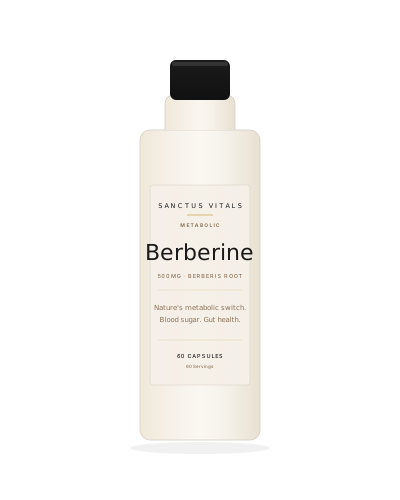
Nature's metabolic switch. 500mg of Berberis root extract for AMPK activation — the same cellular energy pathway targeted by Metformin. Blood sugar regulation, fat metabolism, and gut health without the prescription.

$52 60 capsules · 60 servings · per bottle
3rd Party Tested 500mg Per Serving No Fillers AMPK Activator

The metabolic master switch

01

🔄 AMPK Activation

Berberine activates AMPK (AMP-activated protein kinase) — the same cellular energy sensor targeted by the diabetes drug Metformin. AMPK acts as a metabolic master switch: when activated, it increases glucose uptake into cells, enhances fat oxidation, improves insulin sensitivity, and signals the body to use energy more efficiently. This is why berberine has been called "Nature's Ozempic" — though the mechanism is different, the metabolic outcomes overlap significantly.

02

📉 Blood Sugar Regulation

Berberine upregulates GLUT4 glucose transporters — the channels that move glucose from your bloodstream into muscle and fat cells. Clinical trials show berberine reduces fasting blood glucose and HbA1c (3-month blood sugar average) comparably to Metformin. For anyone with insulin resistance, metabolic syndrome, or pre-diabetes, berberine is one of the most evidence-based natural interventions available.

03

🦠 Gut Microbiome Modulation

Berberine has potent antimicrobial properties in the gut — selectively reducing pathogenic bacteria while supporting beneficial strains like Akkermansia muciniphila (associated with metabolic health and lean body composition). This gut microbiome remodelling is now thought to be a key mechanism behind berberine's metabolic benefits, not just a side effect.

04

❤️ Cardiovascular & Lipid Support

Berberine has been shown to reduce LDL cholesterol, triglycerides, and total cholesterol in clinical trials. It works through a different pathway than statins — upregulating LDL receptor expression in the liver, which clears LDL from the bloodstream more effectively. Combined with its blood sugar benefits, berberine addresses multiple cardiovascular risk factors simultaneously.

Pure Berberis root. Clinical dose.

Supplement Facts (per 1 capsule)

Berberine HCl (from Berberis aristata root)500mg
Other IngredientsVegetable capsule. That's it.

Why Berberine HCl From Berberis Root

  • We use berberine hydrochloride extracted from Berberis aristata root — the most studied and bioavailable form. Not the cheaper Coptis or Phellodendron extracts with variable berberine content.
  • 500mg per capsule matches the dose used in the majority of clinical trials for blood sugar and metabolic outcomes.
  • Berberine HCl form ensures consistent alkaloid content per capsule — critical for dosing accuracy.
  • Note on "Nature's Ozempic": Berberine doesn't mimic GLP-1 like semaglutide. It activates AMPK — a different but complementary metabolic pathway. The comparison is about metabolic outcomes (blood sugar, weight management), not mechanism.

Third-Party Tested. Every Batch.

Every batch is independently tested for berberine alkaloid content (ensuring 500mg per capsule), heavy metals (botanical extracts require rigorous screening), and microbial contamination. COA available on request.

How to use it

Recommended Protocol

Dose: 1 capsule (500mg) 1–3 times daily with meals. Start with 1 capsule and assess tolerance before increasing.

Timing: Take with or immediately before your largest carbohydrate-containing meals. Berberine's glucose-lowering effect is most impactful when taken with food.

  • Common protocol: 500mg with breakfast and 500mg with dinner (1000mg total).
  • Some GI discomfort (mild nausea, stomach upset) is possible in the first few days as your gut microbiome adjusts. Start low.
  • Not recommended to take on an empty stomach — can cause nausea and reduces efficacy for blood sugar management.
  • If on Metformin or diabetes medications, consult your doctor before use — berberine has additive blood sugar-lowering effects.

Stack Suggestions

  • NAD+ (NMN) — AMPK activation (berberine) + NAD+ restoration (NMN). Two of the most powerful longevity pathways targeted simultaneously. The ultimate metabolic longevity stack.
  • Colostrum — Berberine remodels the gut microbiome, colostrum repairs gut lining and provides immune support. Comprehensive gut + metabolic health.

The science

Berberine is an isoquinoline alkaloid found in several plants, most notably Berberis aristata (Indian barberry). It has been used in traditional Chinese and Ayurvedic medicine for over 2,500 years, but modern research has revealed its mechanism with remarkable precision. The primary action is activation of AMPK (AMP-activated protein kinase) — a cellular energy sensor often called the "metabolic master switch." When AMPK is activated, it triggers a cascade of metabolic improvements: increased glucose uptake via GLUT4 translocation, enhanced fatty acid oxidation, improved mitochondrial biogenesis, and reduced hepatic glucose output. These are the same pathways targeted by Metformin, the world's most prescribed diabetes drug.

The clinical evidence is extensive. A landmark meta-analysis published in the Journal of Clinical Endocrinology & Metabolism analysed 27 randomised controlled trials and found that berberine significantly reduced fasting blood glucose (by 0.9 mmol/L), HbA1c (by 0.71%), triglycerides (by 0.53 mmol/L), and LDL cholesterol (by 0.47 mmol/L). Head-to-head comparisons with Metformin showed comparable efficacy for blood sugar control, with berberine additionally improving lipid profiles — something Metformin doesn't reliably do. The "Nature's Ozempic" label, while oversimplified, reflects the genuine metabolic outcome overlap: improved insulin sensitivity, reduced appetite (through GLP-1 modulation — berberine does have some GLP-1 effects), and favorable body composition changes.

The gut microbiome dimension is increasingly recognised as central to berberine's effects. Berberine is poorly absorbed orally (bioavailability under 5%), which initially puzzled researchers. The answer: its primary site of action is the gut itself. Berberine dramatically remodels the intestinal microbiome — reducing pathogenic bacteria, increasing beneficial strains like Akkermansia muciniphila (associated with metabolic health and leanness), and modulating bile acid metabolism. Gut-derived metabolites of berberine then enter systemic circulation and activate AMPK in the liver, muscle, and adipose tissue. This gut-first mechanism explains why berberine's effects are so broad — it's not just a blood sugar supplement, it's a metabolic remodelling agent that works from the gut outward.
Sourcing & quality

Berberis aristata Root Extract

Extracted from Berberis aristata root — the gold standard source for berberine with the highest and most consistent alkaloid content. Not the cheaper Coptis chinensis or Phellodendron amurense extracts used in budget products.

Standardised HCl Form

Berberine hydrochloride (HCl) ensures consistent alkaloid content per capsule. Some products use raw plant powder with variable berberine concentrations — ours is standardised to deliver exactly 500mg berberine per capsule.

Manufacturing Standards

GMP-certified facility. Every batch is third-party tested for berberine alkaloid content (HPLC verified), heavy metals (botanical extracts require extra scrutiny), pesticide residues, and microbial contamination. Full COA available.

What people are saying

Craig M.✓ Verified Purchase

My fasting glucose was consistently 5.8–6.1 (borderline pre-diabetic). After 8 weeks on 1000mg berberine daily (500mg with breakfast and dinner), my latest fasting glucose was 5.1. Doctor was genuinely surprised. The evidence on berberine is real and this product delivers on it.

Alex D.✓ Verified Purchase

Stacking berberine + NMN as a longevity protocol. Three months in — my HbA1c dropped from 5.6 to 5.2, triglycerides are down, and I've lost 4kg without changing my diet. The metabolic shift is noticeable — more stable energy, less afternoon crashes, reduced carb cravings.

James W.✓ Verified Purchase

I was sceptical about the "Nature's Ozempic" claims but decided to try it based on the clinical data. Six weeks in — my continuous glucose monitor shows noticeably flatter post-meal glucose curves, especially after carb-heavy meals. It's not magic but the blood sugar stabilisation is measurable and real.

Rob K.✓ Verified Purchase

Had mild GI discomfort the first 3 days (started at 500mg with dinner), but it resolved completely by day 4. Now taking 500mg twice daily. Energy is more stable, sugar cravings are significantly reduced, and my digestion actually feels better than before — probably the gut microbiome effects. Clean product, no fillers.

Steve L.✓ Verified Purchase

My doctor suggested berberine as a natural alternative before starting Metformin. After 12 weeks my metabolic panel improved across the board — fasting glucose, HbA1c, triglycerides, and LDL all moved in the right direction. He agreed I could stay on berberine and retest in 6 months. Impressive compound.

Common questions

The comparison is about metabolic outcomes, not mechanism. Ozempic (semaglutide) is a GLP-1 receptor agonist — it mimics a gut hormone to reduce appetite and slow gastric emptying. Berberine primarily activates AMPK and does have some GLP-1 modulating effects, but works through a fundamentally different pathway. Both improve blood sugar and can support weight management, but berberine is not a GLP-1 drug. The comparison is useful but oversimplified.
Both activate AMPK and lower blood sugar — combining them increases the risk of hypoglycemia (blood sugar dropping too low). If you're on Metformin or any diabetes medication, consult your doctor before adding berberine. It's not necessarily contraindicated, but dosing needs to be carefully managed to avoid additive glucose-lowering effects.
Berberine has antimicrobial properties that rapidly alter your gut microbiome composition. The initial GI discomfort (mild nausea, loose stools) is a die-off response as pathogenic bacteria are reduced. This typically resolves within 3–5 days. Starting with 500mg once daily and increasing to twice daily after a week minimises this adjustment period. Always take with food.
Fasting glucose improvements can appear within 2–4 weeks. HbA1c reflects a 3-month average, so meaningful changes take 8–12 weeks of consistent use. Lipid improvements (LDL, triglycerides) typically show up on blood work at 8–12 weeks. For best results, combine with dietary improvements (reducing refined carbohydrates) and regular exercise.
Some practitioners recommend cycling (8 weeks on, 2 weeks off) as a precaution, though clinical trials up to 3 months of continuous use showed no issues. If you're using berberine long-term, periodic breaks or cycling with other AMPK activators (like exercise or fasting) is reasonable. Consult your healthcare provider for personalised guidance.

You might also like

Berberine$52